
Warehouse logistics robotics
Intralogistics robotics connects the warehouse and production into a single flow. Autonomous forklifts and mobile robots receive and put away goods, pick orders, deliver materials to machines and assembly lines, and take away finished products. They work around the clock and connect to your WMS and MES. Production never waits for materials, the warehouse handles more orders in the same space, and employees are freed from heavy, repetitive transport work.
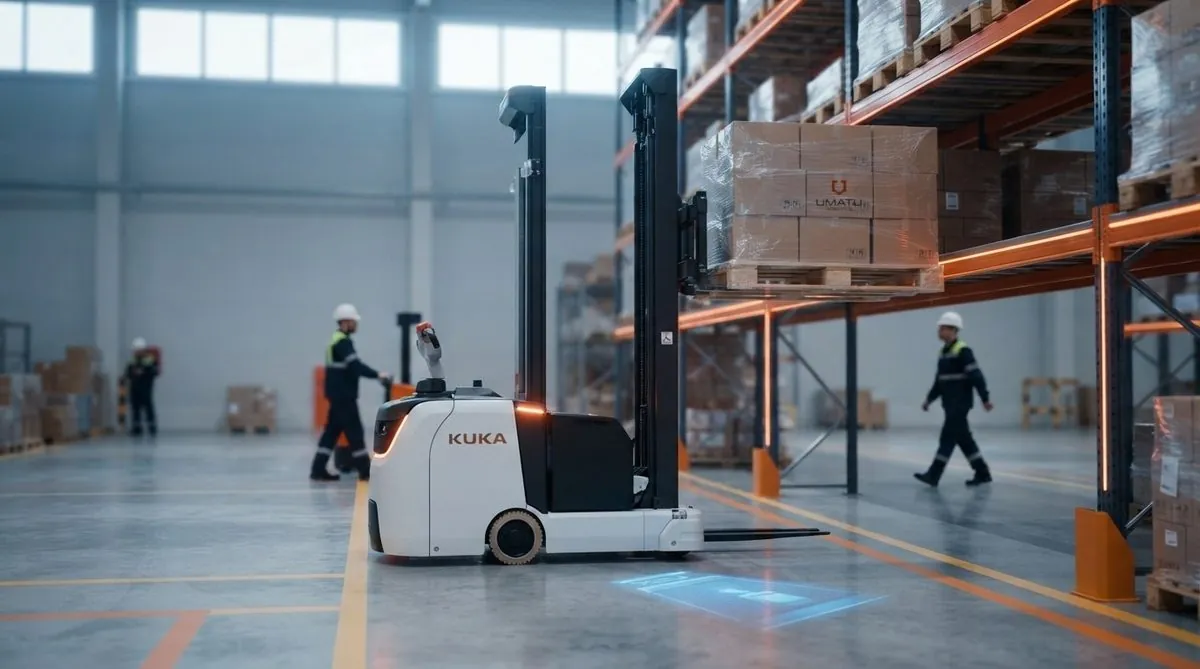
Autonomous forklifts and stackers
What it is
An autonomous pallet truck or stacker picks up a pallet from the floor, a rack or a conveyor and carries it through the warehouse. It handles standard pallets weighing up to 1.5 t, and stackers lift loads to rack levels. It is the same pallet truck or forklift, just without a driver.
Why robotize
A forklift needs a driver on every shift, and collisions with people and racks are the main risk in a warehouse. An autonomous forklift works on tasks from the system, drives along verified routes with safety lidars and slows down near people.
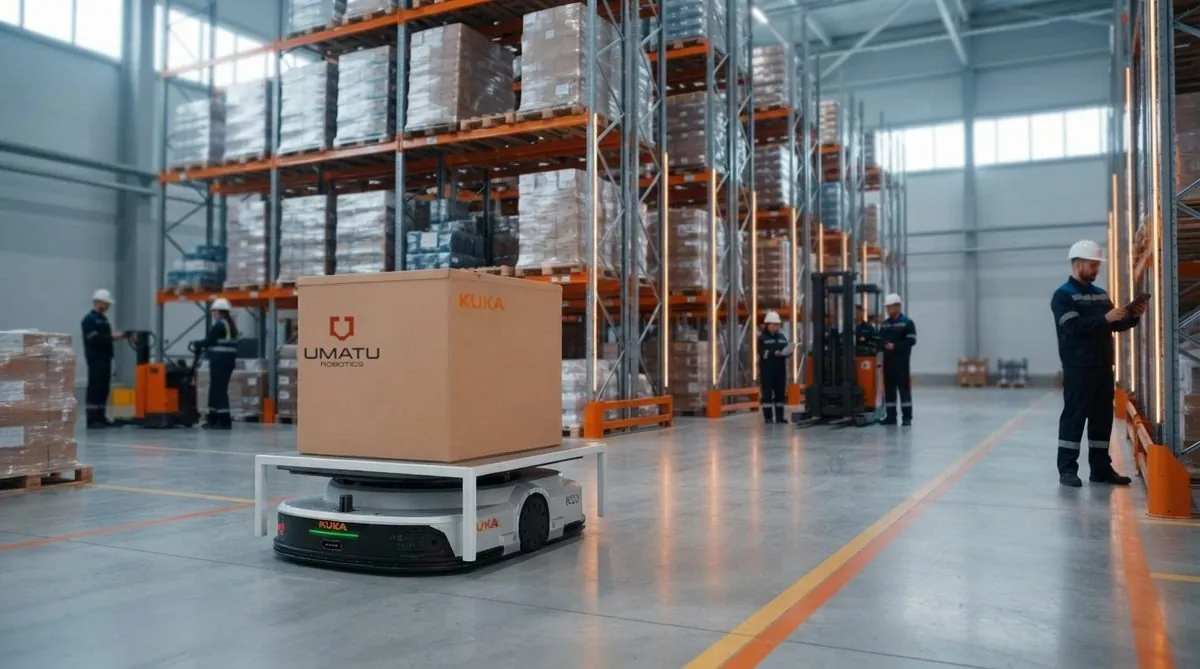
Transport AMRs
What it is
A low mobile platform drives under a rack, trolley, bin or pallet on a stand, lifts the load and carries it to its destination. Payload from 250 kg to 3 t; two KMR 3010 platforms paired together carry up to 6 t. Suitable for supplying materials to lines and removing finished products.
Why robotize
Employees spend their shift moving trolleys and bins between areas. The robot navigates by a map of the premises without magnetic tape, docks precisely at stations (±5 mm with QR markers, ±10 mm with SLAM) and runs 8–10 hours on a single charge.
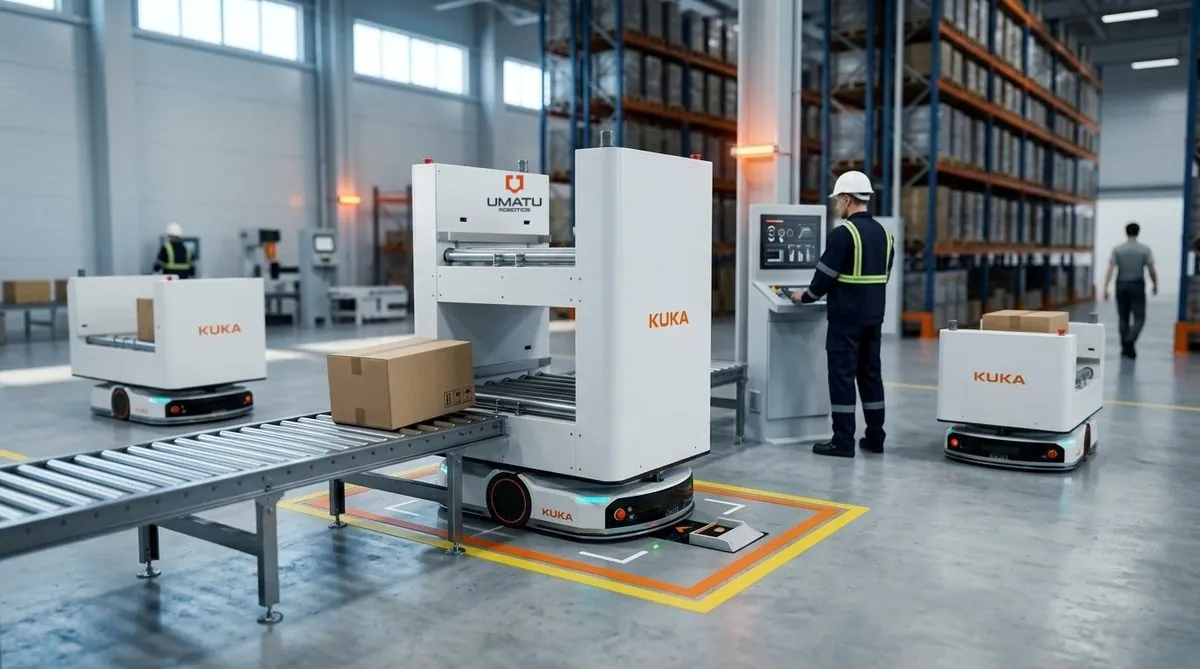
AMR with roller conveyor
What it is
A roller conveyor is installed on the platform: the robot itself takes a box or pallet from a conveyor line and unloads it onto another conveyor, station or rack. We select the roller configuration for the load size and line height.
Why robotize
Transfer between lines and the warehouse is a manual operation that slows down the flow. The robot connects separate conveyors without fixed transfer conveyors across aisles and is easily reconfigured when the layout changes.
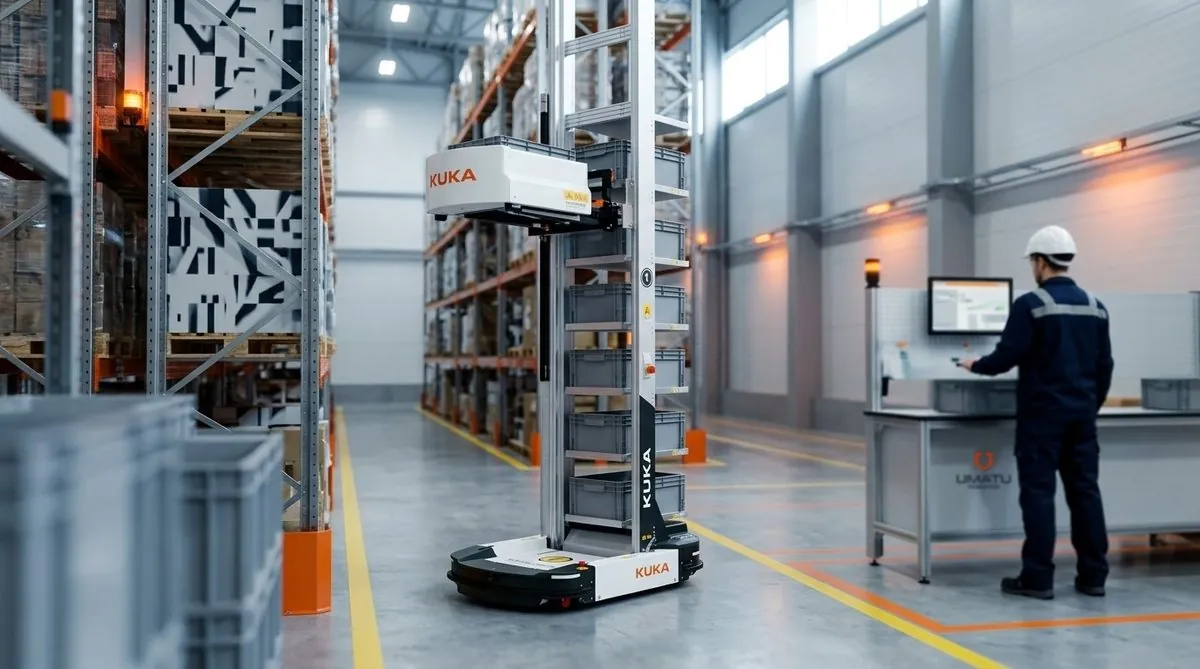
Robots for bins and containers
What it is
A robot with a lifting mast picks bins from racks at heights from 0.4 to 4 m and carries up to 8 bins per trip to the picking area. It works with standard 600×400 mm bins weighing up to 30 kg. Suitable for warehouses of components, spare parts and e-commerce.
Why robotize
In manual picking, the picker spends most of the time walking between racks. The robot brings the right bins to the workstation on the goods-to-person principle, and racks can be built higher and denser.
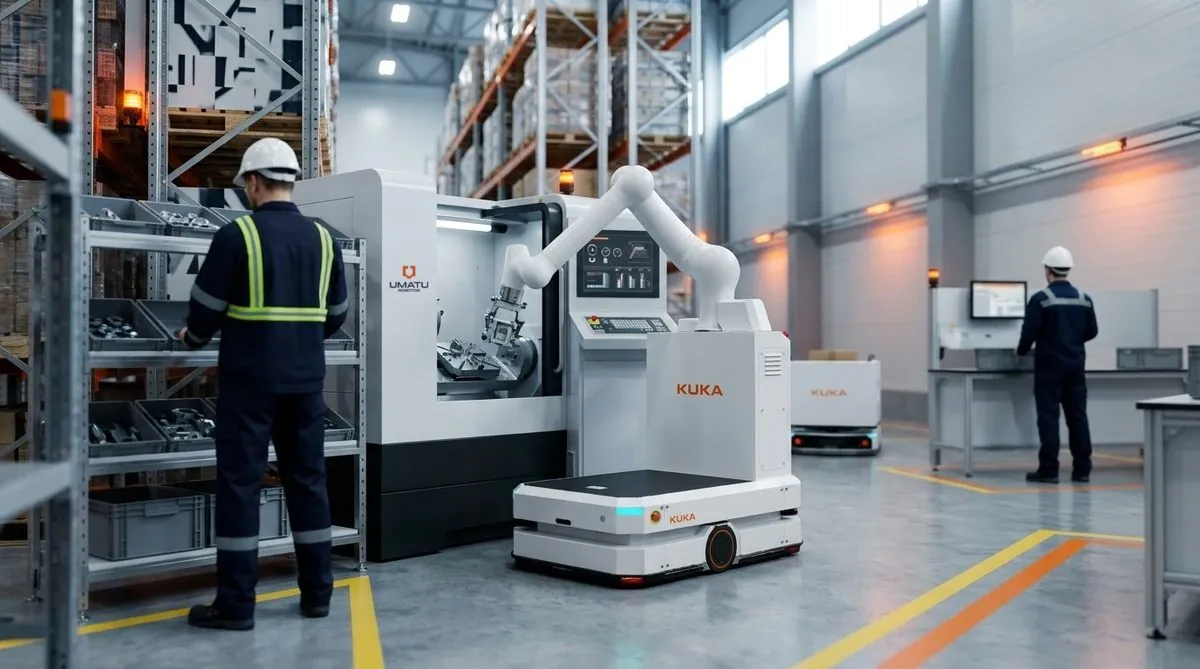
Mobile manipulators
What it is
A collaborative robot on a mobile platform drives to a station by itself, picks up a part, moves it, loads a machine or sorts parts into containers. One mobile manipulator serves several stations instead of a stationary robot at each.
Why robotize
A stationary robot sits idle if its station isn't fully loaded. A mobile manipulator works where it is needed right now and covers operations that lack staff on the second and third shifts.
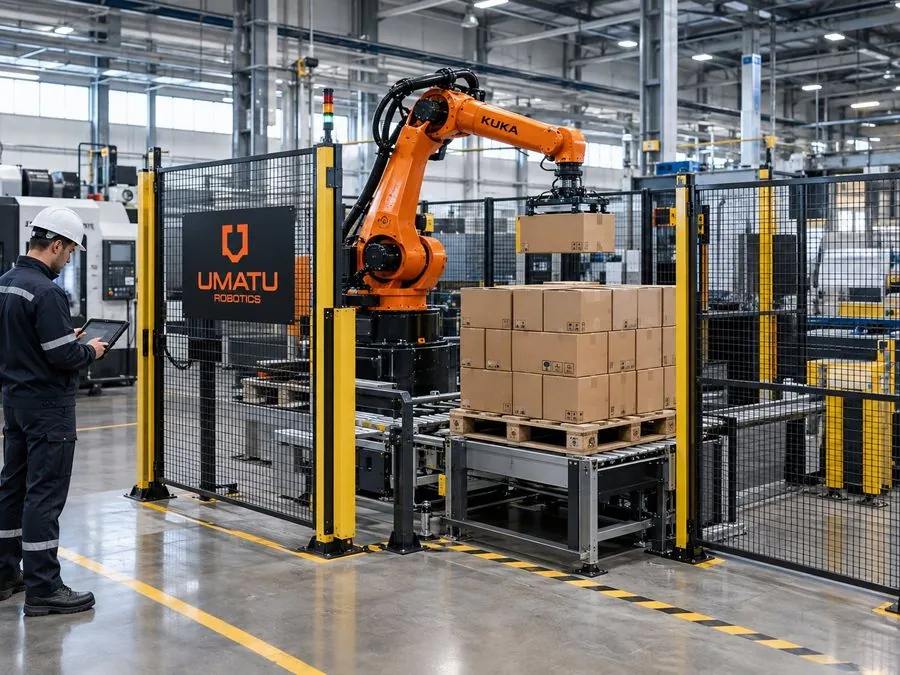
Palletizing and depalletizing
What it is
A robot stacks products onto a pallet at the end of the line, and a transport AMR or autonomous stacker immediately takes the finished pallet to the warehouse. At the warehouse inlet the reverse operation is performed: unloading incoming pallets.
Why robotize
Combining a palletizer with mobile robots eliminates manual labor and forklifts along the entire route from line to rack. More about palletizing itself — in the “Industrial process robotics” section.
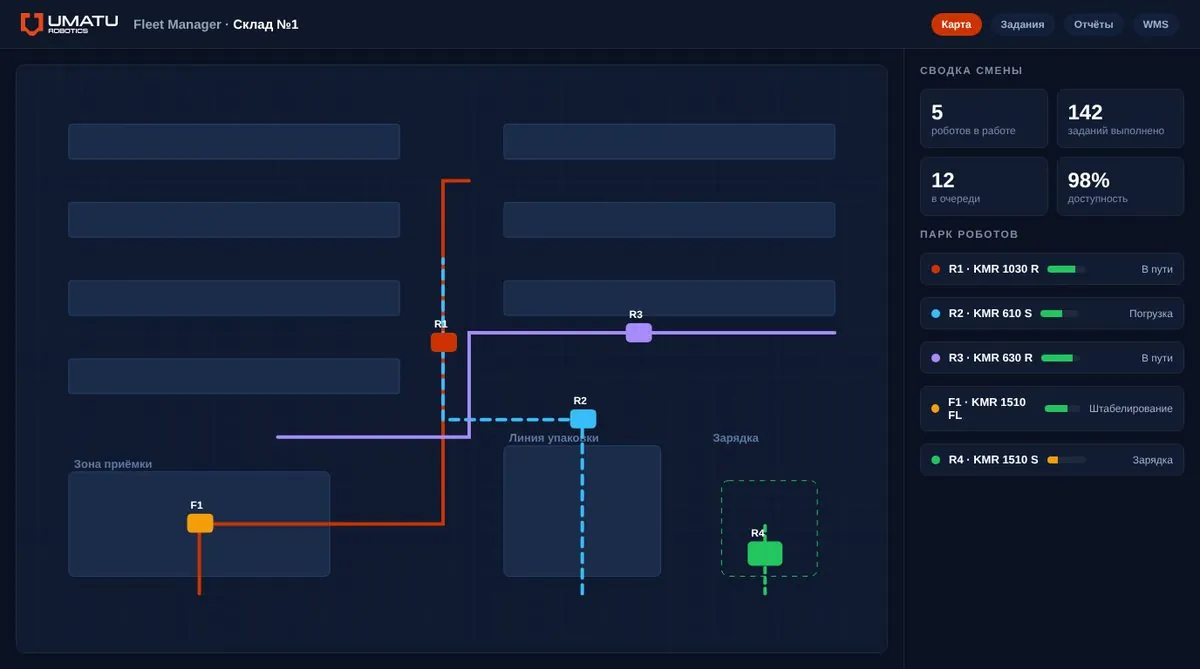
Fleet management and WMS integration
What it is
A single system assigns tasks to all robots, plans routes, manages traffic at intersections and sends robots to charge, including at wireless stations. Tasks come from your WMS, ERP or 1C via API, and completion status is reported back.
Why robotize
Without a single system, robots get in each other's way and run on manual commands. Fleet management balances the workload, shows the status of every robot on the warehouse map and provides productivity reports. If you don't have a WMS yet, we will help you choose one.
How we work
- 1
Defining the task
We discuss what prevents efficient work and define the goal of robotization
- 2
Diagnostics and audit
We analyze processes and equipment on site
- 3
Design
We design the solution and its integration into your process
- 4
Integration and implementation
Supply, installation and commissioning
- 5
Service and training
Support and staff training